Pre-registration DRAFT: the Squint-twin qualification screen — first use of the SO-101 digital twin, relative reads only
Draft cut 2026-08-22 00:2xZ (work session riding the gripfix
endpoint battery), queue item squint-twin-screen-prereg — the
eval-design v0’s named slot 2.
NO launch from this item. DRAFT status: the reads, gates, and
expectation grid below are frozen now and do not move; the
finalization amendment (before any launch, in-channel per the
standing no-GO-ask rule) fills exactly the named slots — the
preflight-2 receipts (§7), the adaptation-recipe command block, the
frozen instruction strings, and the pair-2 slot that waits on
tonight’s gripfix frozen-grid verdict. Substrate:
Squint (MIT, local checkout ~/squint),
preflighted GO 2026-08-14
(note).
Plain words. We have a second simulator available: a digital twin of exactly our robot arm, published by another lab, with automatic success grading. Before ever letting it influence a decision, we have to qualify it — the way you’d qualify a new measuring instrument against one you already trust. The plan has three gates. First, mechanical: prove our policies’ outputs actually drive the twin correctly (units, joint order, camera plumbing), by replaying a real robot episode inside it. Second, a positive control: teach one of our models the twin’s alien-looking world with a small dose of in-twin demonstrations — if even an adapted model can’t score, the twin can’t referee anything and we close the screen as a broken instrument. Third, the actual measurement: take two of our checkpoints whose quality difference we know precisely from our own simulator (28/100 vs 8/100 at grasping), adapt both identically, and ask whether the twin sees the same ordering. If it does, we’ve bought an independent second opinion for future model comparisons — plus an unlimited supply of ground-truth-labeled robot videos for calibrating failure detectors. If it doesn’t, we record that and the twin stays a toy. Absolute scores in the twin are never claims — only differences between our own models, measured under identical conditions.
The tier decision, resolved (the item’s first deliverable)
The preflight note’s rule (2026-08-14): “Squint is the successor tier if the wrist-transfer screen hits F-instrument or the success floor holds.” Both branches have since fired:
- The wrist-transfer screen closed F-instrument (08-15): its control couldn’t certify its own instrument at n=25, and the success-rate form of the transfer question was left standing.
- Its successor-requirement #1 — “a competence floor first: re-screen on a policy whose success rate can actually move” — is now met: the grasp-SFT lineage has a 28/100 checkpoint (onerig) and a certified 20-point paired spread below it.
Tier decision: GO for qualification. Not GO for judging: per eval-design v0, the twin’s registered role until this screen passes is none — it screens nothing, gates nothing. This pre-registration IS the gate before first verdict-adjacent use.
The question and the registered role
One question: can the Squint twin, with the domain gap held constant across arms, reproduce a capability ordering that sim100 certified? Pass → the twin registers in eval-design v1 as a relative screening instrument (A/B deltas between our checkpoints, never absolutes, never a verdict-gater). Fail → it registers as a labeled-rollout generator only (idea #6), and the menu’s next tier stays sim100-only.
Gate 0 — mechanical adapter (CPU, no policy)
The adapter (a ~100-line gym loop per the preflight) carries four frozen conversions:
- Units + joint order: policy outputs LeRobot servo degrees; the
twin’s
pd_joint_posconsumes absolute radians (normalize_action=False, bounds = joint limits). Arm joints:deg2rad. Gripper: the twin’s own deploy path encodes a gripper-specific affine (sim convention −10°..120° ↔ servo open constant;deploy_utils/manipulator.py:49-52,135) — we invert it with OUR calibration’s open value (demos command exactly {0, 41.69}); the two affine constants are a preflight-2 receipt. - Rate: our chunks are 30 Hz (sim100
CONTROL_HZ = 30); the twin is hard-pinned atcontrol_freq=10(envs/base_random_env.py:148). Frozen: subsample every 3rd action, execute 10 env-steps per replan — 1 s wall-equivalent per replan, the same cadence as sim100’s execute-horizon 30. The published twin dynamics are not touched (noSimConfigoverrides). - Cameras: the dual-camera subclass the preflight priced (wrist
mount + third mount both exist in the base classes), 224×224 via
sensor_configs,apply_overlay=False(raw renders — thergb+segmentationtrap is moot),domain_randomization=False(deterministic paired seeds, verified in preflight). Wrist frame →[wrist camera|…]; the third-person frame’s kind tag is judged byresolve_camera_kindson the saved preflight frame — a preflight-2 receipt, frozen at finalization, identical across arms. - Decode + stats: sim100 protocol constants verbatim — euler-10,
bf16 decoder, each checkpoint’s own training stats
(
grasp_demos_v2/mergedworn-row rule carried).
Gate 0 read (pass/fail): (a) determinism entry gate — one seed
rolled twice, per-step obs bit-equal (wrist-screen precedent); (b)
rig-episode replay — a banked grasp_demos_v2 episode’s action
trace driven through the adapter into the twin: tracking p50 error
< 0.05 rad across arm joints, no joint-limit violations, gripper
open/close events reproduced. Fail → fix or close; nothing downstream
launches on a failed adapter.
Gate 1 — the sim-adaptation sanity arm (the positive control)
Separates “renderer is alien” from “policy is bad”. The wrist screen’s successor rule applies: the control runs at treatment n (n=100), not a cut-rate pilot — a control that can’t fire is decoration.
- Demo source: the repo ships no policy checkpoints — we train
Squint’s own state-based SAC expert per task (
train_squint.py, 2–9 min/task on a 3090-class GPU; priced ≤0.5 GPU-h for the 2-task set), then roll it out and keep ~100 success episodes/task, re-rendered through OUR adapter config (dual-camera 224, raw, DR off) — the twin gives ground-truth success labels for free. - Conversion: twin episodes → LeRobot format (actions/state back in servo-degree convention through the inverse adapter — the same constants Gate 0 verified). Conversion oracle: one episode round-tripped frame- and action-bit-exact.
- Adaptation: short SFT via
bijou.train(the only training path), starting from each arm’s checkpoint, one frozen recipe, identical across arms — same steps, LR, seed, data; no tuning, no second attempt. Budget hard cap ≤2.5 GPU-h/arm; exact step count in the finalization command block. - Gate 1 read (pass/fail): the adapted stronger arm scores ≥20/100 on its best task after the band pilot (below). Fail → F-instrument: the twin cannot be made legible to our stack at this budget; screen closes, no relative read is attempted, the labeled-rollout deliverable (#6) survives.
Gate 2 — the qualification read (the screen proper)
- Pair 1 (frozen now, verdict-independent):
grasp_sft_v2_joint_1gpu_pdnorm_onerig@3000 (28/100) vs…_democlean@3000 (8/100) — the maximum-contrast banked pair, 20 points on paired seeds, and (pending tonight’s gripfix verdict) a gripper-amplitude mechanism that Lift/Place tasks exercise directly. Pair-2 slot: filled at finalization from the gripfix frozen-grid verdict (≥20 → gripfix joins as the hygiene-rule arm); pair 2 is optional and never blocks pair 1. - Tasks:
SO101LiftCube-v1primary,SO101PlaceCube-v1secondary — piloted by the Gate-1 adapted arm into the 20–80% band (the banked bench rule); out-of-band → substitution ladder Reach (easier) / Stack (harder), frozen order, logged. - Cells: n=100 paired seeds (seeds 0–99), DR off, both arms adapted by the identical Gate-1 recipe. The unadapted pair runs the same cells as a free record-only rider (expected at/near floor; if it isn’t, that’s worth knowing and costs nothing extra).
- Primary read: paired per-seed McNemar on success, adapted
onerig vs adapted democlean, primary task — the standing sim100
machinery (
sim100_paired_read.pyclass). - Co-primary (rig-grammar rehearsal): per-episode
time-to-predicate curves from the twin’s honest
infopredicates (reached_object→is_item_grasped→item_lifted), Kaplan–Meier with timeouts right-censored + KS with episode-clustered bootstrap — the eval-design tier-3 analysis run for the first time on cheap rollouts. Full CDF panel published; no scalar summaries without it.
Frozen expectation grid:
| outcome (primary task, adapted pair) | verdict |
|---|---|
| Δ(onerig−democlean) > 0, McNemar CI excl. 0 (or KS agrees, pre-reg direction) | ordering preserved — twin registers in eval-design v1 as a relative screening instrument |
| CI straddles 0 | underpowered/insensitive at n=100 — twin stays non-instrument for this capability class; record, no claim either way |
| Δ < 0, CI excl. 0 | substrate divergence — loudest possible flag; both reads recorded, NO ruling on which substrate is right (only the rig can arbitrate); twin stays non-instrument |
Budget and gates
SAC experts ~0.5 + adaptation ≤2.5×2 + rollout inference (~800
episodes × ~5 replans × ~0.6 s + pilots) ~1 + margin ≈ cell gate
≤7 GPU-h, abort-and-close at the gate. Sim overhead itself is
noise (1.35 s/ep at the CPU floor). Every GPU leg launches
systemd-run detached at a free window, policy-server checked, per
the standing rules; the twin never preempts a sim100 verdict leg.
Preflight-2 receipts (CPU, before finalization)
- Dual-camera subclass renders both views in one env (saved frames).
resolve_camera_kindsjudgment on the third-person frame → frozen kind tag.- Gripper affine constants extracted (ours: open 41.69; twin sim convention −10..120) + Gate-0 replay green.
- LeRobot conversion oracle green on one round-tripped episode.
train_squint.pysmoke (imports + a few CPU env steps; no GPU).
Claims contract (frozen)
- Relative deltas only, domain gap held constant across arms.
- Absolute twin numbers are never claims — the paper’s own in-domain BC baseline at 41.9% sim success is the permanent warning label; ours sit under a far larger gap.
- No sim-to-real claims — the twin is visually far-OOD from both the rig and sim100; nothing here measures transfer.
- One role per instrument: this screen can promote the twin to relative screening instrument, nothing higher; twin reads never gate a sim100 verdict, and a passed screen is not license to skip sim100 — it adds a second opinion, it replaces nothing.
- Silence proves nothing: a null Gate-2 read demotes the twin, it does not exonerate either checkpoint.
What this feeds
Eval-design v1 slot 2 (this pre-reg), idea #16 (the substrate menu: sim100 / twin / rollout-free / rig), idea #6 (the labeled-rollout corpus: every twin episode banks frames + per-step predicates + ground-truth success — detector calibration data at unlimited volume).
Appendix (2026-08-22 00:4xZ, same session): preflight-2 receipts — EXECUTED
The §“Preflight-2 receipts” list, run CPU-only in the twin’s venv
while the gripfix battery rode gpu0 (CUDA masked + lavapipe, GPU
untouched). Probe: fontaine/scripts/squint_preflight2.py; facts:
outputs/squint_preflight2/facts.json (mirrored to
fontaine-reports).
These are receipts, not results — the finalization amendment freezes
the two re-priced lines below before any launch.
- R1 dual-camera subclass: GREEN. One env serves both views at
(1, 224, 224, 3) — the wrist camera inherited (mount + per-step
pose update), a static
third_cameraadded on the base env’s existingcamera_mountwithThirdCameraEnv’s published pose/FOV constants. ~25 lines, as priced. Wrist · third. Kind-tag observation for the frozen slot: the third view is an elevated three-quarter view (eye 0.25 m up, ~40° down), not an overhead — the honest vocabulary choice isfront(orside), nottop; our checkpoints trained on top+wrist only, so the tag is OOD either way. Frozen at finalization. - R2 determinism entry gate: GREEN. Same seed + same 10-step action sequence twice → sensor bytes and qpos bit-equal (DR off).
- R3 Gate-0 rig-episode replay: tracking GREEN, limit line needs
the re-price.
grasp_demos_v2/mergedep 0 (449 frames @30 Hz → 150 twin steps @10 Hz) through the frozen mapping: tracking p50 0.0025 rad (gate <0.05 — 20× under), p95 0.148 (fast-transient lag, consistent with 10 Hz steps over a 30 Hz path), gripper transitions 3/3 commanded→achieved. But the drafted “zero limit violations” line is unmeetable as written: 41 clips, all ≤0.047 rad — forensics: 36×wrist_flexgrazing its limit by ≤0.0032 rad, 3×shoulder_liftat ≤0.0471 rad (the twin’s −1.7453 rad limit sits ~2.7° inside our demo’s deepest reach −1.792), 2×elbow_flex≤0.003. A banked substrate fact, not an adapter bug. Finalization re-price (named slot): Gate-0 limit line becomes “no arm clip > 0.05 rad” — preserving the intent (catch unit/order/sign errors, which produce radian-scale clips) without failing on the twin’s genuinely tighter joint limits. - R4
train_squint.pysmoke: GREEN after dep install (wandb,tensordict,torchrl,tqdm,torchvisionadded to the isolated venv — the 08-14 preflight installed eval deps only). Recorded venv drift: thetorchrlinstall upgraded the venv’s torch 2.6.0-cpu → 2.13.0+cu130. All receipts re-taken under the final stack; the replay statistics are bit-identical across the torch change (CPU PhysX physics unmoved). The exec session inherits the venv as-is;CUDA_VISIBLE_DEVICESmasking is what keeps CPU legs off the GPU now that the build can see it.
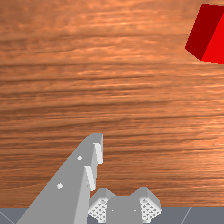
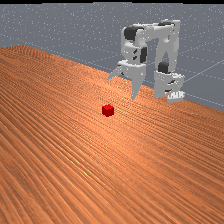
Open before FINAL: the LeRobot conversion oracle (needs the conversion tooling the exec item builds), the adaptation-recipe command block, instruction strings, the third-camera kind tag, the Gate-0 limit-line re-price above, and the pair-2 slot (gripfix verdict, tonight).
FINALIZATION AMENDMENT (2026-08-22 02:5xZ) — all named slots frozen; launch follows this post
Exec session squint-twin-screen-exec part (b), announced
in-channel per the standing no-GO-ask rule. Every open slot above is
resolved here; nothing else in the pre-registration moves. The
pipeline below was smoke-tested end-to-end (junk 30k-step expert →
rollout → re-render → LeRobot → oracle) before this amendment;
smoke artifacts deleted, receipts quoted where they price a frozen
line.
Slot 1 — Gate-0 limit line (re-priced as named): “no arm clip
0.05 rad“. R3 stands green under this line (41 clips, all ≤0.047 rad, twin-limit geometry not adapter error).
Slot 2 — third-camera kind tag: front. Dataset key
observation.images.front, mirroring grasp_demos_v2’s own key
pair — the twin dataset wears exactly {wrist, front} like the rig
demos (twin base_camera → wrist, third_camera → front).
Slot 3 — instruction strings (frozen):
- LiftCube:
Pick up the red cube. - PlaceCube:
Pick up the red cube and place it in the bin.
Slot 4 — conversion spec + oracle re-price. Twin episodes (10 Hz)
→ LeRobot v3 at fps 30 by repeat-3 upsampling, so the deploy
adapter’s subsample-every-3rd exactly inverts the conversion.
Actions = the rollout controller’s absolute radian targets
(target-delta control is PDJointPosController with
use_target/use_delta — _target_qpos IS the pd_joint_pos-equivalent
command), inverse-adapted to servo degrees; state likewise from qpos.
Oracle re-price: the drafted “action-bit-exact” becomes round-trip
max |Δ| < 1e-5 rad (deg↔rad float paths aren’t bit-stable; smoke
measured 6.6e-8), frames bit-exact at the pre-encode boundary, and
decoded-video PSNR recorded as a fact, not a gate — our own demos
ride the same mp4 path (smoke: ~36–40 dB). Dataset:
~/datasets/fontaine/squint_twin_demos_v1, ≤100 episodes/task.
Slot 5 — expert + collection config (frozen). Experts:
train_squint.py paper defaults with --no-env-domain-randomization
(DR off everywhere in this screen), seed 1, no wandb, ckpt = last
100k-step eval save, hard cap 45 min/task. Collection: rollout in the
expert’s native env config; re-render through the dual-camera 224 raw
DR-off pd_joint_pos env, same seed + set_state_dict; the final
success label is the re-render’s own end-state success (episodes
losing success in replay are dropped; keep-rate + replay-divergence
receipts banked — smoke divergence p50 0.0038 rad). Per-step honest
predicates banked per episode (the idea-#6 corpus starts here).
Slot 6 — adaptation recipe command block (frozen, identical both arms). Priced from the pdnorm lineage’s measured 16.2 s/step at eff-96: 500 steps ≈ 2.25 GPU-h/arm ≤ the 2.5 cap.
uv run python -m bijou.train \
  --train-data ~/datasets/fontaine/squint_twin_demos_v1 \
  --init-from ~/checkpoints/finetune/grasp_sft_v2_joint_1gpu_pdnorm_{onerig|democlean}/step_003000 \
  --objective joint --joint-ce-weight 1.0 --insulate-flow \
  --recompute-stats --per-dataset-flow-norm \
  --flow-decoder-init inherit --image-augment 0.8 \
  --decoder-lr 5e-5 --backbone-text-lr 1e-5 \
  --steps 500 --batch-size 96 --backward-chunks 8 \
  --activation-checkpointing --offload-optim --prune-superseded-optim \
  --holdout-episodes 0.1 --eval-every 100 --eval-samples 256 \
  --save-every 250
Adapted arms wear their own recomputed stats (the twin rows); the unadapted record-only rider wears the sim100 worn-row rule verbatim.
Slot 7 — pair-2: EMPTY. The gripfix frozen-grid verdict landed 5/100 (≤10 band); the frozen rule (“≥20 → gripfix joins”) does not fire. The screen runs pair 1 only.
Launch plan: leg A now (experts → collection → conversion → oracle, one detached unit, ~0.8 GPU-h); leg B (adaptation, both arms chained, ~4.5 GPU-h) after the oracle receipt is verified; Gate-2 rollout harness at the next window. Cell gate ≤7 GPU-h unchanged.
RESULTS (2026-08-22 13:57Z; appended 2026-08-22 23:0xZ work session): Gate 1 FAILED — screen closed F_INSTRUMENT
Full record: results page.
Verdict artifact outputs/squint_screen/eval/gate1.log.
- Gate 0: PASS (preflight-2 receipts + leg A oracle — replay tracking p50 0.0025 rad, no arm clip > 0.05 rad, round-trip 6.5e-8 rad, frames bit-exact pre-encode).
- Leg A COMPLETE 05:43Z (~1.9 GPU-h): experts success 1.00 both
tasks;
squint_twin_demos_v1banked, 100+100 episodes with per-step ground-truth predicates. - Leg B COMPLETE 13:33Z (r4 full retrain ~4.4 GPU-h after the ENOSPC + resume-bug incident, ~2.7 GPU-h re-spend, crossing recorded in-channel): frozen Slot-6 recipe both arms, probe twins onerig 2.47@500 / democlean 2.5187@500.
- Gate 1: FAIL. Adapted onerig @500: band pilots 0/20 both tasks
(BELOW_BAND), cells completed to n=100 anyway — 0/100 lift,
0/100 place vs the ≥20/100 best-task bar →
FAIL_F_INSTRUMENT, the pre-registered valid end. Milestone forensics: reached_object 20/100, grasps 3–4/100, item_lifted 7–10/100, success 0 — partial competence, not a transport flatline. No relative read attempted; Gate-2 spend skipped; substitution ladder (Reach) logged, never auto-run — a future pre-registered session’s call. - Registered role per the frozen fail branch: the twin is a labeled-rollout generator only (idea #6 — the corpus survives and banked its first 400 predicate-labeled episodes). It screens nothing, gates nothing; the next eval tier stays sim100-only. onerig 28/100 vs democlean 8/100 stands exactly where sim100 certified it.